Chapter 4: ライセンス分析
ライセンスリスクを自動分類(High Risk / Risk / Known-Normal)
ライセンスとは
ソフトウェアライセンスとは、そのソフトウェアをどのように使ってよいかを定めたルール(使用許諾条件)のことです。外部のライブラリを自分のプロジェクトに組み込んで使う場合、そのライブラリのライセンス条件を守る必要があります。
たとえば、あるライセンスでは「商用利用禁止」「ソースコードの公開義務」などの制約がある場合があります。こうした条件を知らずに使うと、法的なリスクが発生する可能性があります。
Dependa は依存ライブラリのライセンスを自動的に特定し、リスクの度合いに応じて分類してくれます。
v2.0 ライセンスリスク分類
Dependa v2.0 では SPDX ID(ライセンスの国際標準識別子)をもとに、各ライセンスを以下のリスクレベルに分類します。
| リスクレベル | 意味 | 代表的なライセンス |
|---|---|---|
| High Risk | 商用利用の制限や強いコピーレフト条件があり、組み込みは推奨されません。早急な確認が必要です。 | GPL-3.0, AGPL-3.0, CC-BY-NC-4.0, SSPL-1.0 |
| Risk | 利用は可能ですが、条件(ソースコード公開義務など)に注意が必要です。 | LGPL-2.1, LGPL-3.0, MPL-2.0, EPL-2.0 |
| Known-Normal | 商用利用を含め、一般的に安全に利用できるライセンスです。 | MIT, Apache-2.0, BSD-2-Clause, BSD-3-Clause, ISC |
| Unknown | ライセンスを特定できなかったパッケージです。手動確認を推奨します。 | (ライセンス情報なし) |
分類は一般的な判断基準に基づいています。組織の法務方針によっては、異なる判断が必要な場合があります。
「要確認」バッジと理由表示
レビュー時に追加確認が推奨されるライセンスには HTML レポート上で「要確認」バッジと理由ラベルが表示されます。v2.0.5.0 でも判定軸は変更されていません。レビュアーが判断する際の補助情報として位置づけられます。
| 表示 | 意味 | 対象例 |
|---|---|---|
| 分類 disclaimer(テーブル直前) | 「分類はレビュー時の初期分類であり、最終的な利用可否判断ではありません」 | すべてのレポート |
| 要確認 バッジ | 利用形態によって判断が分かれるライセンス。レビュアー確認推奨 | BUSL-1.1 / Elastic-2.0 / CC-BY-4.0 / Zlib / Artistic-2.0 / QuestPDF Community / Microsoft Software License |
| 理由: 非 OSI 承認ライセンス | OSI 承認外(一般的な OSS と異なる利用条件の可能性) | BUSL-1.1 / Elastic-2.0 |
| 理由: Source-available(利用形態次第) | ソースは閲覧可能だが、SaaS 提供等で制約あり | BUSL-1.1 / Elastic-2.0 |
| 理由: データ・コンテンツ用ライセンス | コードへの適用は注意が必要 | CC-BY-4.0 |
| 理由: 分類の信頼度が低い | 分類自体に揺れがあり、組織方針による判断推奨 | Zlib / Artistic-2.0 |
| 理由: 商用ライセンス条件あり | 商用利用条件・配布制約等の確認推奨 | QuestPDF Community / Microsoft Software License |
これらはすべて「説明」のための補助表示で、Dependa が利用可否を自動判断することはありません。最終判断は常に組織のレビュアーが行います。
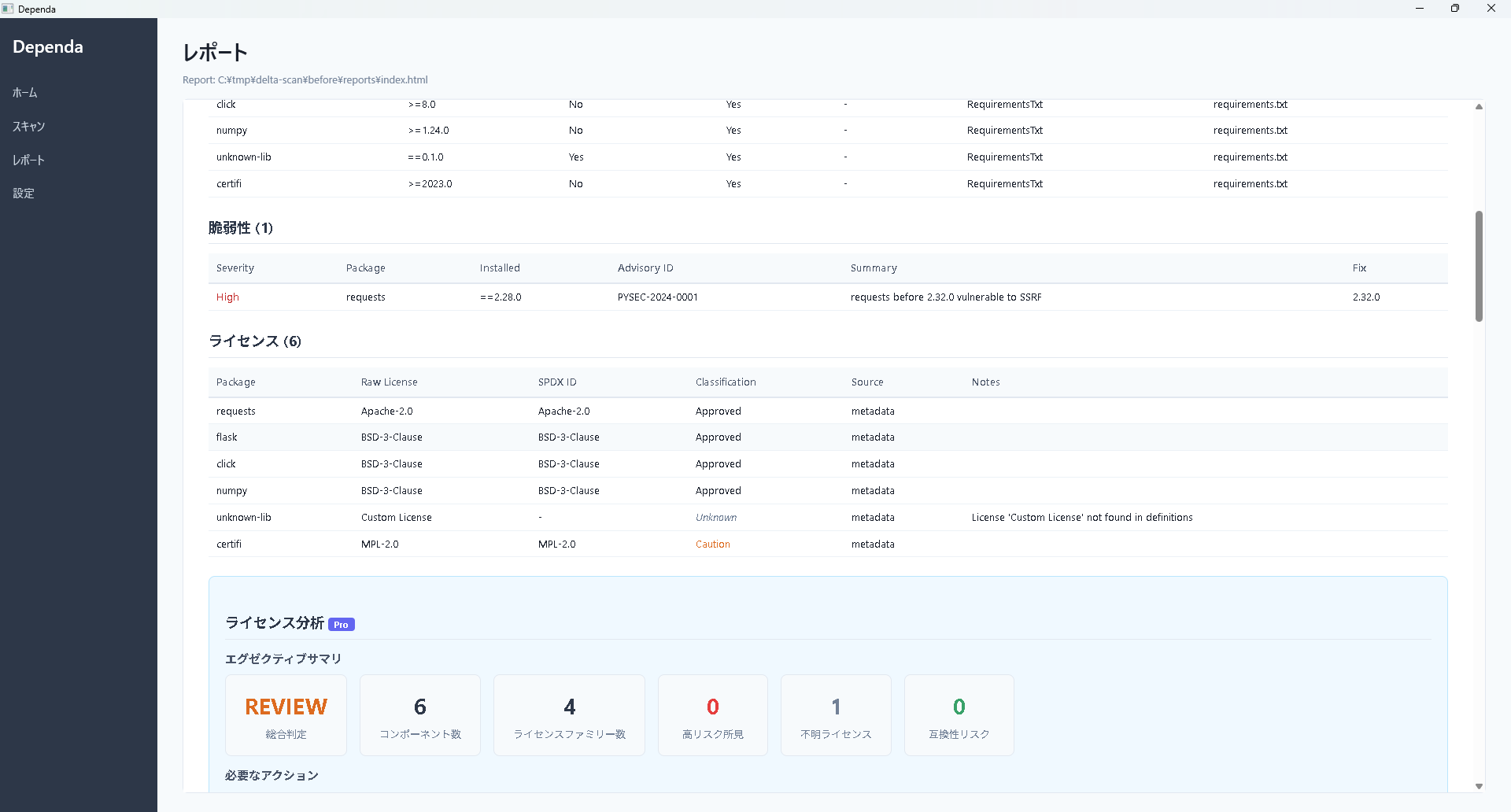
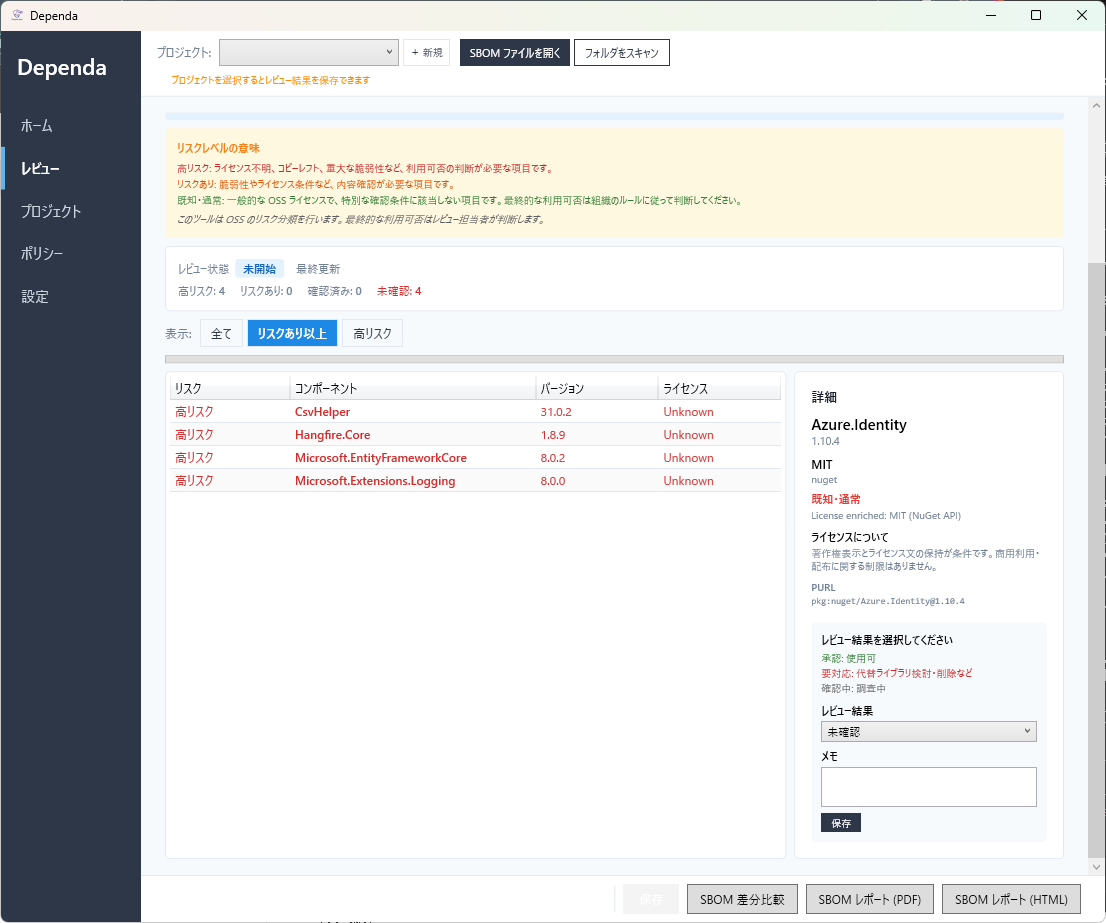
オンライン補完(PyPI / npm / NuGet) PRO
Pro プランでは、依存定義ファイルだけではライセンスが特定できない場合に、パッケージレジストリからライセンス情報をオンラインで補完します。
| レジストリ | 対象 |
|---|---|
| PyPI | Python パッケージ |
| npm | Node.js パッケージ |
| NuGet | .NET パッケージ |
- ローカルのファイルにライセンス情報がないパッケージに対して自動的に問い合わせます。
- Unknown の数を減らし、より正確な分析結果を得られます。
- 設定画面の「オンライン補完」を ON にすると有効になります。
ポリシー判定ルール
Dependa はライセンスリスク分類に基づき、自動的にポリシー判定を行います。
High Risk になる条件: High Risk に分類されるライセンスが 1 件でも検出された場合、そのパッケージは High Risk と判定されます。
Risk のライセンスがある場合は Risk となりますが、利用条件を確認した上での使用を推奨します。
Chapter 4: License Analysis
Automatically classify license risks (High Risk / Risk / Known-Normal)
What Are Licenses?
A software license defines the rules (terms and conditions) governing how software may be used. When you incorporate external libraries into your project, you must comply with each library's license terms.
For example, some licenses may include restrictions such as "no commercial use" or "source code disclosure required." Using libraries without being aware of these conditions can create legal risks.
Dependa automatically identifies the licenses of your dependency libraries and classifies them by risk level.
v2.0 License Risk Classification
Dependa v2.0 classifies each license into one of the following risk levels based on SPDX IDs (international standard license identifiers):
| Risk Level | Meaning | Example Licenses |
|---|---|---|
| High Risk | Has commercial use restrictions or strong copyleft conditions. Not recommended for inclusion. Immediate review required. | GPL-3.0, AGPL-3.0, CC-BY-NC-4.0, SSPL-1.0 |
| Risk | Can be used, but conditions (such as source code disclosure) require attention. | LGPL-2.1, LGPL-3.0, MPL-2.0, EPL-2.0 |
| Known-Normal | Generally safe for use, including commercial use. | MIT, Apache-2.0, BSD-2-Clause, BSD-3-Clause, ISC |
| Unknown | License could not be identified. Manual verification is recommended. | (No license information) |
Classifications are based on general criteria. Your organization's legal policies may require different assessments.
"Review required" Badge and Reason Labels
Licenses that benefit from additional reviewer confirmation display a "Review required" badge and a reason label in the HTML report. In v2.0.5.0, the classification logic itself is unchanged — these labels serve as supporting context for the reviewer's decision.
| Display | Meaning | Examples |
|---|---|---|
| Classification disclaimer (above the table) | "Classifications shown here are initial inputs for review, not final judgments." | All reports |
| Review required badge | License whose decision depends on usage. Reviewer confirmation recommended. | BUSL-1.1 / Elastic-2.0 / CC-BY-4.0 / Zlib / Artistic-2.0 / QuestPDF Community / Microsoft Software License |
| Reason: Not OSI-approved | Not on the OSI-approved list (terms may differ from common OSS). | BUSL-1.1 / Elastic-2.0 |
| Reason: Source-available (depends on usage) | Source is viewable but SaaS-style restrictions may apply. | BUSL-1.1 / Elastic-2.0 |
| Reason: Data / content license | Application to code requires extra attention. | CC-BY-4.0 |
| Reason: Low classification confidence | Classification itself can vary by organization policy. | Zlib / Artistic-2.0 |
| Reason: Commercial license terms apply | Commercial terms or distribution restrictions to verify. | QuestPDF Community / Microsoft Software License |
All of these are explanatory aids only. Dependa never auto-decides usability. Final decisions are always made by your organization's reviewers.
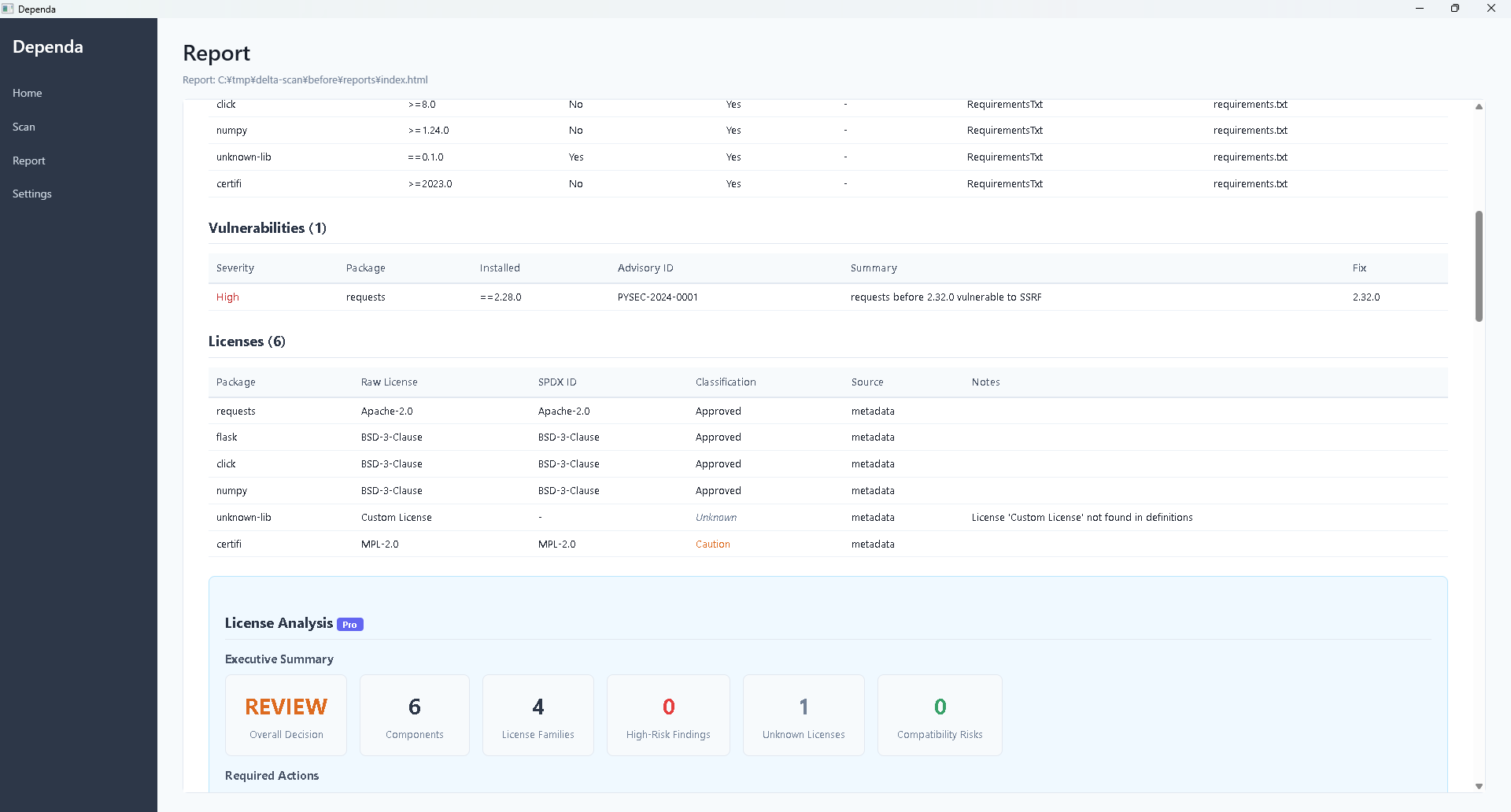
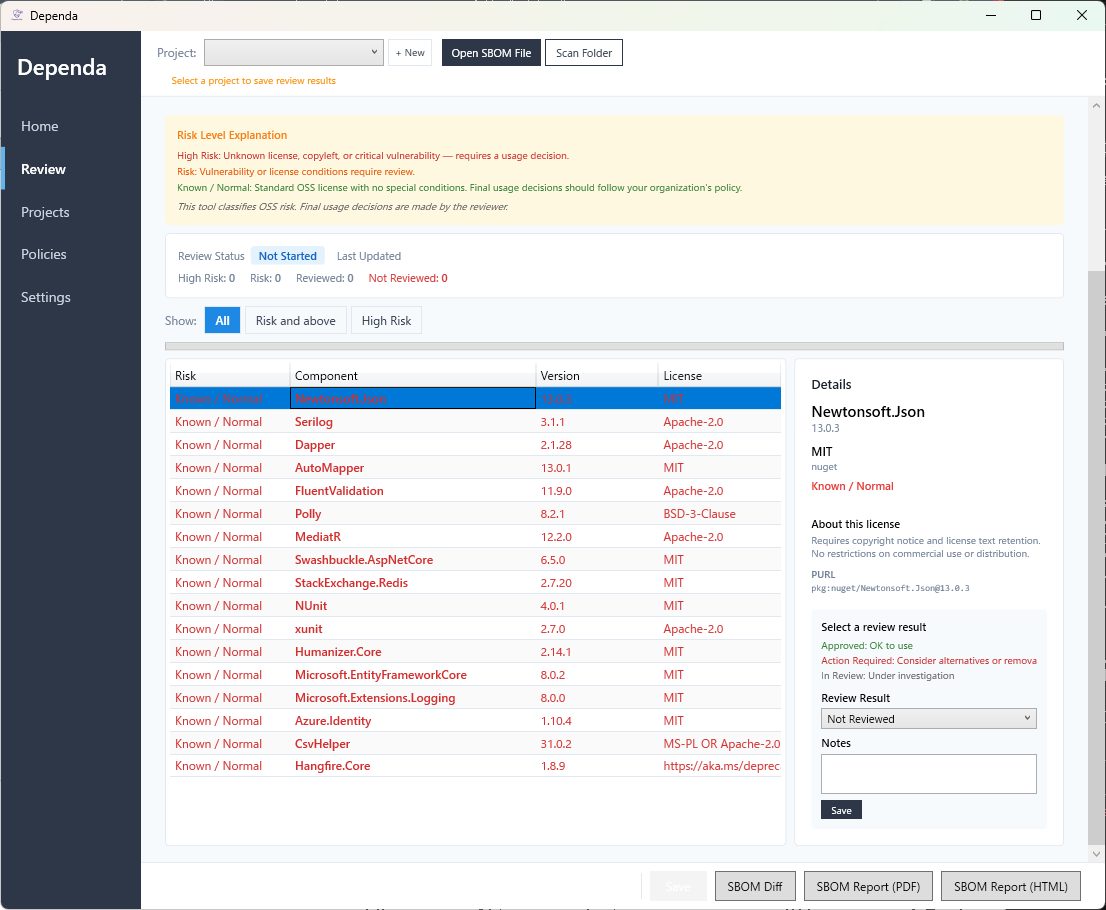
Online Enrichment (PyPI / npm / NuGet) PRO
With the Pro plan, when license information cannot be determined from dependency files alone, Dependa retrieves license data online from package registries.
| Registry | Target |
|---|---|
| PyPI | Python packages |
| npm | Node.js packages |
| NuGet | .NET packages |
- Automatically queries packages that have no license information in local files.
- Reduces the number of Unknown results for more accurate analysis.
- Enable "Online Enrichment" in the Settings screen to activate.
Policy Rules
Dependa automatically evaluates policy based on license risk classifications.
High Risk condition: If even one High Risk license is detected, the package is classified as High Risk.
If Risk licenses are present, the package is classified as Risk. However, reviewing the specific license terms before use is recommended.